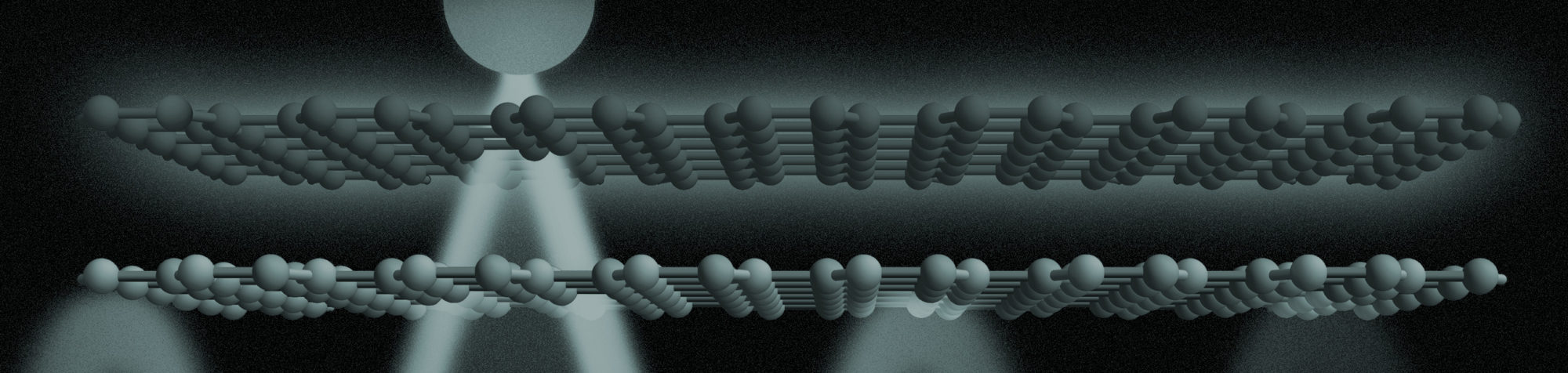
At the Laboratory of Optics of Quantum Materials (LOQM), IIT Bombay, we develop chip-scale silicon photonic devices that form the foundation for next-generation integrated photonic circuits. As part of India’s National Quantum Mission, our research focuses on silicon nitride microresonators, bus waveguides, and grating couplers, with detailed characterization using tunable lasers and precision spectroscopy.
Our work enables applications in sensing, spectroscopy, and chip-scale photonic experiments, and lays the groundwork for future photonic module integration.

Key Research Areas
1. Silicon Nitride Microresonators
We fabricate high-Q microresonators on silicon nitride platforms. These devices support nonlinear optics, frequency comb generation, and filtering applications.
2. Bus Waveguides
LOQM designs and characterizes waveguides to efficiently couple light to microresonators and other photonic elements. Performance metrics such as insertion loss and coupling efficiency are carefully measured.
3. Grating Couplers
We develop fiber-to-chip coupling solutions using grating couplers, enabling efficient light injection into integrated photonic circuits.
4. Device Characterization
Characterization informs design optimization for low-loss and high-performance devices.
Using external cavity diode lasers (ECDL), we measure transmission spectra, resonance wavelengths, and Q-factors.
Selected Projects & Achievements
- Prototype chip-scale silicon photonic resonators integrated with monolithic as well as 2D material based emitters.
- Demonstration of indigenous low loss microresonators, bus waveguides, grating couplers and tapers for sensing applications.
- Publications and preprints on chip-scale device fabrication and characterization, contributing to India’s integrated photonics research ecosystem.
Facilities & Techniques
- Nanofabrication: Lithography, etching, and deposition for Si₃N₄ photonic devices.
- Optical Characterization: Transmission spectroscopy using ECDL, wavelength sweeps, and coupling efficiency measurements.
- Design Tools: Simulation of waveguides, microresonators, and grating couplers using photonic design software.
Future Directions
While our current focus is on device-level research, LOQM is building capabilities toward fully integrated photonic modules, including potential integration with optical transmitters and receivers (TOSA/ROSA), photonic circuits for sensing, and chip-scale platforms for quantum and classical photonics experiments.
Learn more
- View our silicon photonics publications
- Join our lab – Industry and academic partnerships
FAQs:
What is silicon photonics?
Silicon photonics is the design and fabrication of optical devices on silicon-based chips, using platforms like silicon nitride to guide, filter, and manipulate light. At LOQM, IIT Bombay, we build chip-scale silicon photonic devices for sensing, spectroscopy, and integrated photonic circuits.
What silicon photonics devices does LOQM develop?
We fabricate and characterize high-Q silicon nitride microresonators, bus waveguides, grating couplers, and tapers. These components support frequency comb generation, low-loss light routing, and efficient fiber-to-chip coupling for integrated photonic systems.
Why silicon nitride for silicon photonics?
Silicon nitride (Si₃N₄) offers low propagation loss, a wide transparency window, and strong nonlinearity, making it ideal for high-Q microresonators, frequency combs, and sensing. LOQM uses it as the core platform for indigenous, chip-scale photonic device research.
How does LOQM characterize its photonic devices?
Using external cavity diode lasers, we measure transmission spectra, resonance wavelengths, and Q-factors through wavelength sweeps and coupling-efficiency tests. This characterization feeds directly back into design optimization for low-loss, high-performance devices.