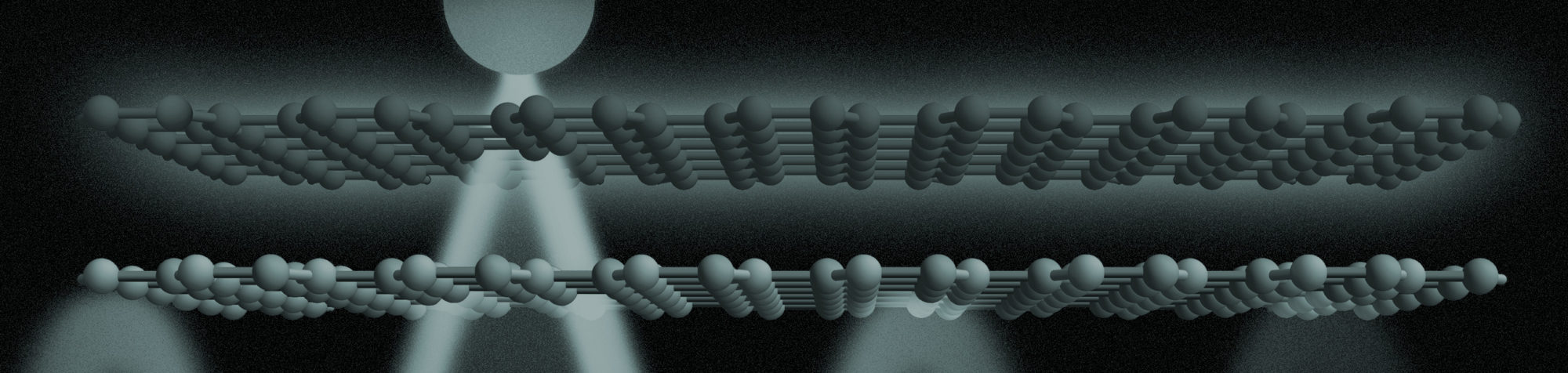
At the Laboratory of Optics of Quantum Materials (LOQM), IIT Bombay, we work at the intersection of machine learning and photonics — in both directions. We use photonic hardware to implement neural networks, and machine learning algorithms to design and optimise photonic and electromagnetic devices. This dual approach makes LOQM one of the few groups in India actively contributing to both sides of this rapidly growing field.
Key Research Areas
1. Photonic Extreme Learning Machines
We design and demonstrate free-space optical neural network hardware based on the extreme learning machine (ELM) framework. By encoding input data onto a laser beam and exploiting coherent free-space propagation as a fixed random projection layer, we realise a neuromorphic computing platform that requires no complex fabrication, is easy to train, and is highly energy efficient. This is among the first experimental demonstrations of photonic extreme learning machine hardware from India.
2. Deep Learning for Metasurface Inverse Design
Designing nanophotonic and electromagnetic metasurfaces is a hard inverse problem — the relationship between geometry and optical response is highly nonlinear and non-unique. We have developed multiple AI-driven approaches to solve it.
Our cyclical deep learning framework performs simultaneous forward and inverse design of nanophotonic metasurfaces using consecutive neural network models combined with a genetic algorithm, published in Nature Scientific Reports. We also demonstrated deep learning-accelerated design of plasmonic metasurfaces in the Journal of Physics D, reducing design time from hours to milliseconds.
Most recently, we developed a physics-guided conditional diffusion model for inverse design of metasurface-based absorbers. By embedding a pre-trained surrogate EM simulator directly into the diffusion framework as a physics-aware regulariser, and using feature-wise linear modulation (FiLM) to condition on target reflection spectra, our model generates practically fabricable metasurface geometries in approximately 30 seconds — compared to months using conventional iterative simulation. It achieves a spectral MSE of 0.0006 and a band alignment accuracy of 0.958, verified experimentally.
3. Surrogate Modelling for Radar-Absorbing Metasurfaces
We have developed a convolutional neural network (CNN) surrogate model for forward design of multi-layered metasurface-based radar absorbing structures (RAS). Using a CNN with Huber loss, our model predicts the full electromagnetic reflection characteristics of candidate meta-atom designs with 99.9
4. Inverse Design of Topological Photonic Crystals
Valley photonic crystals offer topologically protected light propagation immune to fabrication disorder, but their design involves a fundamental tradeoff between topological bandgap width and operating bandwidth. We have developed an automated inverse design framework that co-optimises this topology–bandwidth tradeoff using particle swarm optimisation combined with plane-wave expansion and Berry curvature calculations — producing structures with clean valley-Hall gaps and high interface transmission, verified by full-wave simulation.
5. Machine Learning for Quantum Photonics
Our machine learning and photonics work connects directly to our quantum photonics and silicon photonics programmes. Machine learning tools are increasingly applied to the design and characterisation of quantum emitters, microresonators, and integrated photonic circuits — accelerating the path from simulation to fabricated device in our National Quantum Mission-funded research.
Selected Projects & Achievements
- First experimental demonstration of a free-space photonic extreme learning machine from an Indian academic group — arXiv, 2026
- Physics-guided conditional diffusion model for inverse design of metasurface absorbers — 30-second design vs. months conventionally, experimentally validated — Advanced Physics Research, Wiley, 2024
- Cyclical deep learning for simultaneous forward and inverse design of nanophotonic metasurfaces — Scientific Reports, Nature, 2020
- Fast plasmonic metasurface design via deep neural networks — Journal of Physics D, 2020
- CNN surrogate model for radar-absorbing metasurface EM response, 99.9
- Topology–bandwidth inverse design of valley photonic crystals via particle swarm optimisation — arXiv, 2026
Facilities & Techniques
- Free-space optical setups with spatial light modulators for photonic neural network experiments
- Computational electromagnetics: FDTD, FEM, plane-wave expansion, and Berry curvature calculations
- Deep learning frameworks: PyTorch and TensorFlow for surrogate modelling, generative inverse design (diffusion models, GANs, VAEs), and topology-aware optimisation
- Nanofabrication access via IITBNF for device realisation of ML-designed photonic structures
Learn More
- View our photonic ML publications
- Join our lab — PhD, postdoc, and internship opportunities