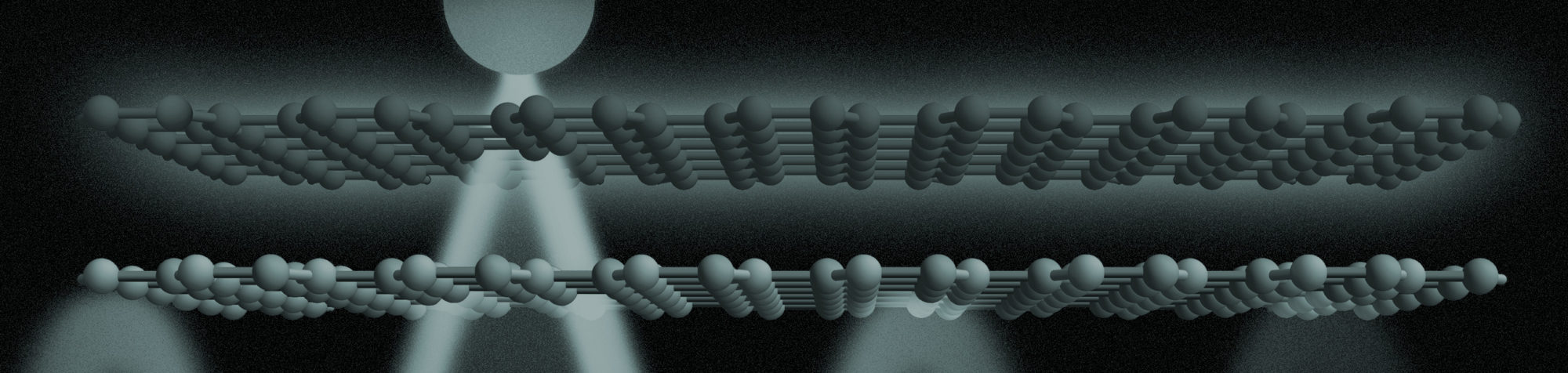
At the Laboratory of Optics of Quantum Materials (LOQM), IIT Bombay, we explore the frontiers of quantum photonics, as part of the National Quantum Mission. Our research focuses on generating, controlling, and detecting single photons and entangled states in advanced photonic platforms, including 2D materials, metasurfaces, and integrated photonic circuits (PICs).
Key Research Areas
1. Single-Photon Sources & Emitters
We develop strain-engineered quantum emitters and defect centers in 2D materials to create reliable single-photon sources for quantum communication and computation.
2. Quantum Communication
Our lab works on chip-scale quantum key distribution (QKD) and other secure photonic channels, enabling next-generation quantum-secure networks.
3. Integrated Quantum Circuits
We design and fabricate photonic circuits for quantum computation and sensing, integrating light sources, modulators, and detectors on a single chip.
4. Quantum Light-Matter Interaction
LOQM investigates strong coupling between photons and matter using polaritons and metasurfaces, enabling precise control of quantum states on the nanoscale.
Selected Projects & Achievements
- High-efficiency deterministic single photon sources on integrated photonic platforms.
- Hyperbolic polariton-based devices for on-chip quantum control.
- Publications in Nature Communications, Advanced Functional Materials, and Nano Letters.
Facilities & Techniques
- Confocal microscopy and spectroscopy for single-photon detection.
- Cryogenic and ambient setups for quantum emitter characterization.
- Nanofabrication facilities for photonic integrated circuits (PICs).
Learn more
- View our quantum photonics publications
- Join our lab – PhD, postdoc, and internship opportunities
FAQs
What is quantum photonics?
Quantum photonics is the science and engineering of light at the single-photon level — generating, controlling, and detecting individual photons and entangled states to enable quantum computing, communication, and sensing. At LOQM, IIT Bombay, we pursue this across 2D materials, metasurfaces, and integrated photonic circuits.
What are the main quantum photonics research areas at LOQM?
Our work spans four connected directions: single-photon sources and quantum emitters in 2D materials; chip-scale quantum communication and quantum key distribution (QKD); integrated quantum circuits combining sources, modulators, and detectors on one chip; and quantum light–matter interaction using polaritons and metasurfaces.
How does LOQM generate single photons?
We develop strain-engineered quantum emitters and defect centres in 2D materials to produce deterministic, high-efficiency single-photon sources on integrated photonic platforms — the building blocks needed for scalable quantum communication and computation.
Can students and researchers join the quantum photonics group?
Yes. LOQM offers PhD, postdoctoral, and internship positions for those interested in quantum photonics, nonlinear optics, and photonic devices. Current opportunities are listed on our openings page — you’re welcome to reach out.